
Deep Focus vs. Multi-Tasking
Are you a multi-tasker? Do you have trouble focusing?
We all have busy lives, and we all want to maximize our time so we can accomplish as much as we can. I know I am guilty of this.
One of my personality traits is that I am “task-oriented,” which means I am always looking for things to do. Also, one of my Gallup Strengths (a popular test of “strengths” in the workplace) is “Achievement,” which means that I am constantly trying to accomplish goals. Many of these achievements have been BIG - a Ph.D., an MBA, a published book - but many of them are also small, daily wins - writing an article, running a 5k.
This combination of “looking for things to do” and “needing to score an accomplishment” makes it difficult for me to focus on big things. I want to do great things, but I feel like I am not achieving if it takes a long time to succeed. So, I jump from one thing to another, and I try to accomplish little things while I am also working on big things.
This doesn’t work. Here is why…
Deep Thinking for a Knowledge Economy
Professional work is no longer a series of repetitive, mindless tasks. Instead, much professional work is now “knowledge work,” which means that it involves thinking. Here are some examples:
You think about what you want to say and how best to say it as you write an email or a social media post, or create a presentation.
You reflect on a co-worker’s or customer’s complaint (in an email, IT ticketing system, voicemail, or phone call), and you think about how you can resolve the problem.
You think about all of the actions that are needed to complete a project, and you try identify who can perform each action and what the best sequence of steps needs to be.
You download data about last month’s sales, students’ exam scores, or patients’ diagnostics, and you analyze the data for meaningful results.
You meet with co-workers to measure performance towards your department’s monthly or quarterly goals, and you think of strategies to improve results.
All of these examples require deep, serious thinking that you cannot perform in a few minutes.

According to Cal Newport (computer scientist, professor, and popular writer), when much of the economy is doing knowledge work, the most successful people are going to be the ones who can reduce distractions and think seriously.
Flow…
According to Psychologist Mihaly Csikszentmihalyi, “flow” is when you are in a high state of mental productivity. More specifically, it is when your mind is stretched to the limit on a project that is both difficult and important. In this mental state, you know you are doing great work on something important because you can feel your mind growing, and you are achieving levels of performance you have never achieved.
You grow, and you learn, and you amaze yourself!
Deep thinking makes you experience moments of flow. And, according to Csikszentmihalyi, moments of “flow” are some of the most meaningful intellectual experiences of your life. Think about how proud you were of yourself when you learned something hard that was meaningful to you…

I experience moments of “flow” when I study and write, and I think this is one of the reasons I am so interested in education. Education provides many, many opportunities to experience moments of flow.
But flow doesn’t happen by multi-tasking…
The Problem with Multi-Tasking … Cognitive Load
Okay, we all know by now that we cannot effectively multi-task. Sure, you can listen to a podcast while you are cooking dinner or washing dishes, but your mind is on auto-pilot in these situations, and these tasks don’t require deep thinking.
How about talking on the phone or participating on a Zoom session, while you are writing emails? Or, how about doing homework and responding to text messages, while the TV or Spotify plays in the background? Personally, I can’t focus on everything at once, and you can’t achieve deep levels of thinking and flow by multi-tasking.
We are limited by our “cognitive load.” Cognitive load is the amount of information you can store in your working memory. It’s a similar concept to how many numbers you can remember … about 7, but, for many people, as low as 4.
When you multi-task, your brain tries to pay attention to everything, and, eventually, when you open too many mental tabs, your brain can’t handle any more information.
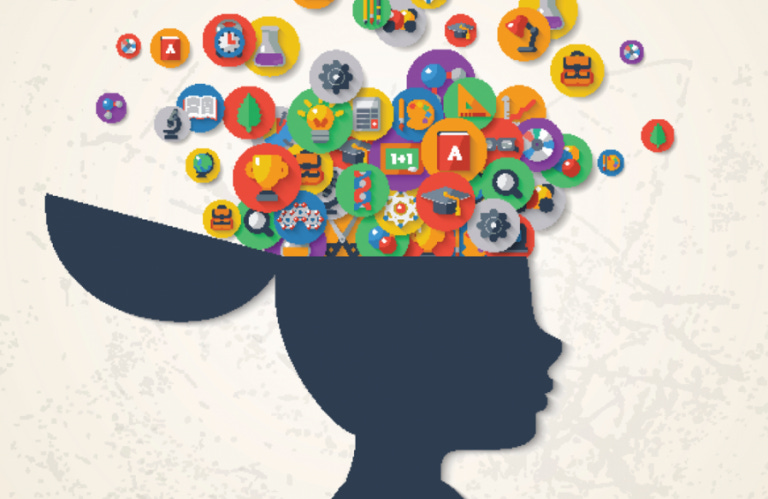
As educators, we identify how many new concepts we ask students to learn in each class session, and we try to limit the number of new concepts. Otherwise, after too much information, students complain that they are “brain-dead.” As educators, we space out the information, and we put different activities in between groups of three or four to help them reset their minds.
But, at home or in the office, educators and managers can’t control how many mental tabs students and employees have going at the same time.
Cognitive Residue
Multi-tasking means that you are simultaneously doing many things. But what if you do many things one at a time? For example, instead of responding to emails while you are creating a presentation, you work on the presentation for 20 minutes, respond to emails for 10 minutes, then back to the presentation, and later back to the email.
Does this reduce your cognitive load? Yes, it does…
But there is still a problem. It takes a while to shift your mind from one task to another. So, in the first few minutes of a new activity, you are still thinking about the previous activity.
It’s like walking through the mud. You bring it with you…

When you return to your presentation, your mind is still thinking about the emails you just read.
If you give yourself enough time, your mind will eventually settle down and get back to business. But, if you switch from one mental activity to another, you are not giving your brain a chance to get into the flow state.
Reflect on your work…
Take a moment to think how you do your work. Do you give yourself enough time to enter the “flow state” of “deep thinking,” or do you constantly switch from one thing to another? If you do switch activities frequently, try to give yourself a few seconds of rest so you can clear your mind and start fresh.
Finish what you are doing, close your eyes, just breath in and out for a few second, then think about what you plan to do next, open your eyes, and start your new activity with a fresh, fully-charged brain.
Thank you reading my newsletter. If you enjoy this content, consider sharing it with someone else. If someone forwarded this newsletter to you, consider subscribing.